Objective and Key Results: Difference between revisions
Jump to navigation
Jump to search
imported>Unknown user No edit summary |
No edit summary |
||
| (3 intermediate revisions by 2 users not shown) | |||
| Line 1: | Line 1: | ||
OKR is a management methodology that helps to ensure all the company is focused on the same important objectives. | |||
* '''Objective''': defines WHAT needs to be achieved, the direction to take. | |||
* | * '''Key results''': define HOW we reach the objective by defining goal metrics. | ||
* | |||
When defining objectives, these must: | |||
* Express intention | |||
* Have a clear value | |||
* Be aggressive but realistic | |||
Main objective must be well defined based on data, not choose it based on ideas. | |||
<span id="okr-4-principles"></span> | |||
= OKR 4 principles = | |||
<span id="focus"></span> | |||
== Focus == | |||
* They allow to establish a team commitment with objectives and priorities. | |||
* Company must give example of the commitment with objectives. | |||
* It is very important to explain the why of the objective that we want to reach. | |||
* When defining objectives we must have clear they must be focused on solving a problem, not how to do it, this is responsibility of Key Results. | |||
<span id="coordination"></span> | |||
== Coordination == | |||
We link individual with company objectives | |||
* When colleagues help choosing how to reach objectives it is more probable that they contribute to reach it. | |||
* For a good interdepartmental coordination, team objectives must be public because it allows: | |||
** Support a team to reach an objective | |||
** Other teams can contribute to the objectives | |||
** We establish interdepartmental priorities what may have dependencies between objective | |||
* Worker feels more realized knowing the concrete way he contributes to the main objective. | |||
<span id="follow-up"></span> | |||
== Follow up == | |||
* Review and possible rethink of Key Results | |||
* There is nothing more motivating that doing progress in our own work. | |||
* If an objective is traced periodically there is more chance of achieving it | |||
* OKRs are modifiable. Their cycles are: | |||
** Development | |||
** Update | |||
** Start | |||
** Stop | |||
* Objective doesn't finish when completing development. It must be analyzed lately with [http://www.from-developer-to-cto.com/management/manage-objectives/Key-Performance-Indicators <u>KPI</u>] | |||
* Autoevaluation: when completing an objective, we must extract personal conclusions and know how to extract conclussions of the objective based on the percentage achieved of the objective. | |||
* You don't learn from experience, but reflecting about experience. "Have I contributed? Obstacles found? What would I change? What have I learnt?" | |||
* Objective consecution are divided in green (80%-100%), yellow (60%-80%), red (<60%) | |||
<span id="demand"></span> | |||
== Demand == | |||
<ul> | |||
<li><p>Motivate excellence of the work as acceptance of failure</p></li> | |||
<li><p>Highest risk is not taking any. We must establish two types of objectives:</p> | |||
<ul> | |||
<li><p>factibles: those we trust we are achieving</p></li> | |||
<li><p>aspirationals (Big Hairy Audacious Goals): have a long term requirement.</p> | |||
<p>[[File:UserDocumentation_Knowledge_Central_KC_Project_Project_management_manage_objectives_Objective_and_Key_Resultsimage-20250419-080619.png|256px|center]]</p></li></ul> | |||
</li></ul> | |||
<span id="key-results"></span> | |||
= Key results = | |||
Key results provide: | |||
* milestones while reaching the goal. Divide and conquer. Any objective we have must be compartmentalized. | |||
* Describe results. Each key result must be final, not completing an activity. Example; "reach 100 daily clients" instead of "increment number of clients" | |||
* Once completed we must present the evidences of their consecution. | |||
[[Category:manage objectives]] | |||
Latest revision as of 12:47, 22 October 2025
OKR is a management methodology that helps to ensure all the company is focused on the same important objectives.
- Objective: defines WHAT needs to be achieved, the direction to take.
- Key results: define HOW we reach the objective by defining goal metrics.
When defining objectives, these must:
- Express intention
- Have a clear value
- Be aggressive but realistic
Main objective must be well defined based on data, not choose it based on ideas.
OKR 4 principles
Focus
- They allow to establish a team commitment with objectives and priorities.
- Company must give example of the commitment with objectives.
- It is very important to explain the why of the objective that we want to reach.
- When defining objectives we must have clear they must be focused on solving a problem, not how to do it, this is responsibility of Key Results.
Coordination
We link individual with company objectives
- When colleagues help choosing how to reach objectives it is more probable that they contribute to reach it.
- For a good interdepartmental coordination, team objectives must be public because it allows:
- Support a team to reach an objective
- Other teams can contribute to the objectives
- We establish interdepartmental priorities what may have dependencies between objective
- Worker feels more realized knowing the concrete way he contributes to the main objective.
Follow up
- Review and possible rethink of Key Results
- There is nothing more motivating that doing progress in our own work.
- If an objective is traced periodically there is more chance of achieving it
- OKRs are modifiable. Their cycles are:
- Development
- Update
- Start
- Stop
- Objective doesn't finish when completing development. It must be analyzed lately with KPI
- Autoevaluation: when completing an objective, we must extract personal conclusions and know how to extract conclussions of the objective based on the percentage achieved of the objective.
- You don't learn from experience, but reflecting about experience. "Have I contributed? Obstacles found? What would I change? What have I learnt?"
- Objective consecution are divided in green (80%-100%), yellow (60%-80%), red (<60%)
Demand
Motivate excellence of the work as acceptance of failure
Highest risk is not taking any. We must establish two types of objectives:
factibles: those we trust we are achieving
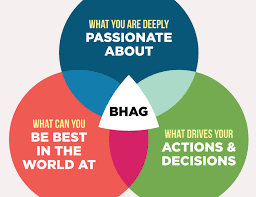
aspirationals (Big Hairy Audacious Goals): have a long term requirement.

Key results
Key results provide:
- milestones while reaching the goal. Divide and conquer. Any objective we have must be compartmentalized.
- Describe results. Each key result must be final, not completing an activity. Example; "reach 100 daily clients" instead of "increment number of clients"
- Once completed we must present the evidences of their consecution.